ERP for Small Business Manufacturing
GET A QUOTEMaking Every Process Work Together
Manufacturing may look simple from the outside, but behind every finished product is a chain of activities—raw material purchasing, inventory management, production planning, quality checks, sales, dispatch, accounts, and more. For a small manufacturing business, managing all these moving parts manually can quickly become overwhelming.
This is where an ERP for small business manufacturing can bring a real change. By connecting important operations through a single digital system, ERP software can help manufacturers organise their processes, track resources, and keep better control over day-to-day activities.
From Raw Materials to Finished Products
A manufacturing business needs to know what materials are available, what needs to be purchased, what is currently in production, and what has already been completed.
With an ERP system, these processes can be connected. Stock levels can be monitored, purchase requirements can be recorded, production activities can be planned, and finished goods can be tracked through the same platform.
This gives business owners and teams a clearer picture of what is happening across the production cycle.
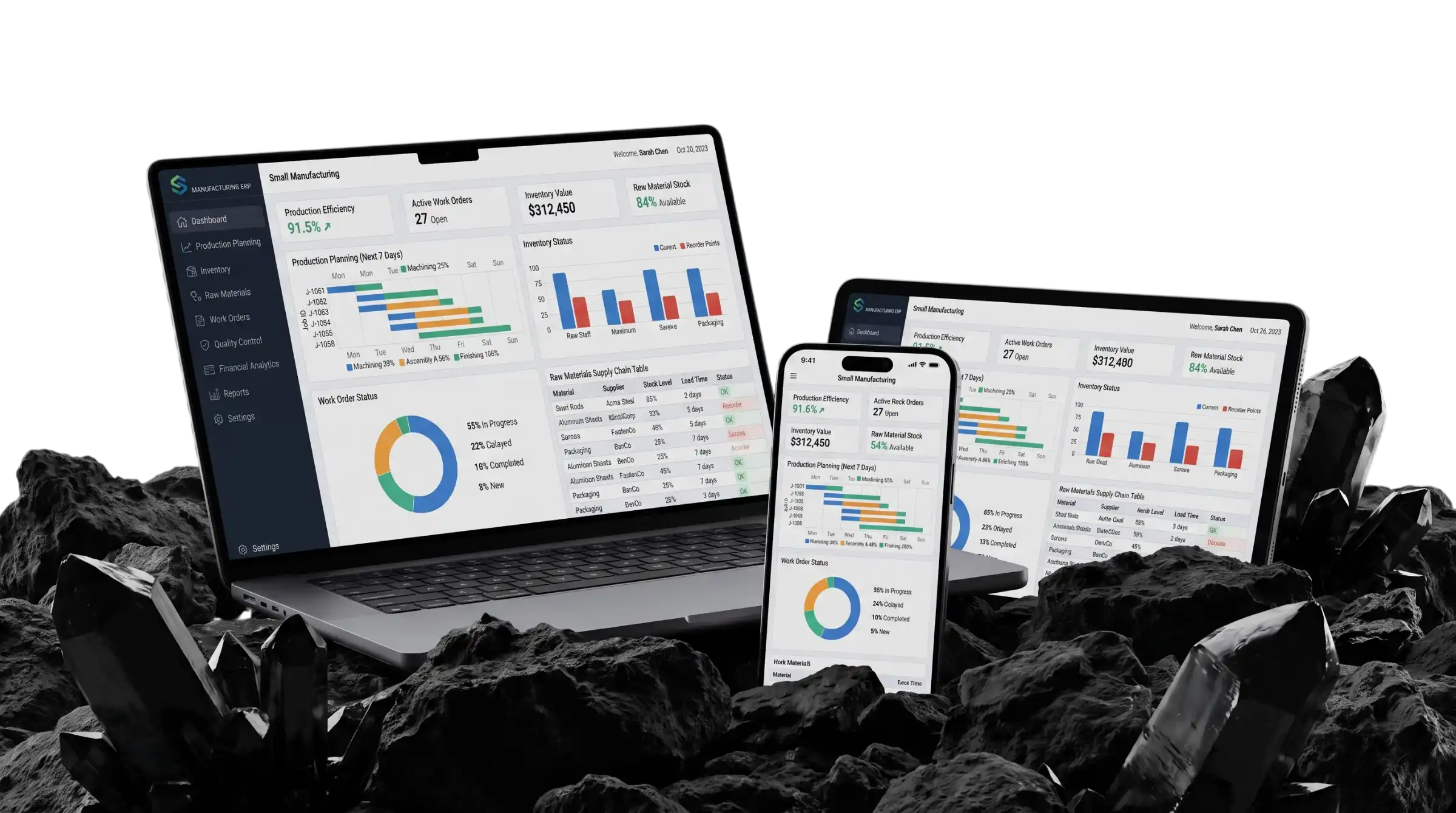
Simplifying Production Planning
Production delays can affect everything from customer deliveries to cash flow. Poor planning, material shortages, or a lack of visibility into ongoing production can make these problems harder to manage.
Manufacturing ERP software can help businesses organise production schedules, manage material requirements, monitor work orders, and track the progress of manufacturing activities.
Instead of depending entirely on notebooks, spreadsheets, or multiple disconnected applications, teams can work with information available through one central system.
Better Inventory Control
For small manufacturers, excess inventory can tie up money, while insufficient stock can interrupt production. Maintaining the right balance is therefore important.
An ERP system can help track raw materials, work-in-progress items, and finished products. Businesses can get better visibility into stock movement and make purchasing decisions based on more organised information.
This can also reduce the chances of losing track of materials or maintaining unnecessary stock.
Connecting Manufacturing With the Rest of the Business
Production does not operate independently. It is closely connected to sales, purchasing, finance, inventory, and customer requirements.
A manufacturing ERP can connect these functions so that information flows more smoothly between departments. Sales orders can influence production requirements, production can affect inventory, and business transactions can flow into financial records.
This connected approach can reduce repetitive data entry and help teams work with consistent information.
Why Small Manufacturers Can Benefit From ERP
ERP is not only for large factories with complex operations. Small manufacturing businesses can also use ERP solutions to create more structured workflows as they grow.
The important thing is choosing a system that matches the business rather than paying for unnecessary complexity. A scalable solution can start with essential functions and expand as the company’s requirements increase.
Technology Designed Around Your Production Floor
At Tisser Technologies LLP, Kottayam, we focus on creating technology solutions that address practical business requirements. For small manufacturers, an ERP solution can be designed around their production processes, inventory needs, sales operations, and management requirements.
Whether you are still managing production through spreadsheets or looking to bring multiple business functions onto one platform, the right ERP for small business manufacturing can help create greater visibility, coordination, and control.
When your production, inventory, sales, and business operations move together, it becomes easier to see the bigger picture—and focus on taking your manufacturing business forward.